

-
Vendor:Andatech
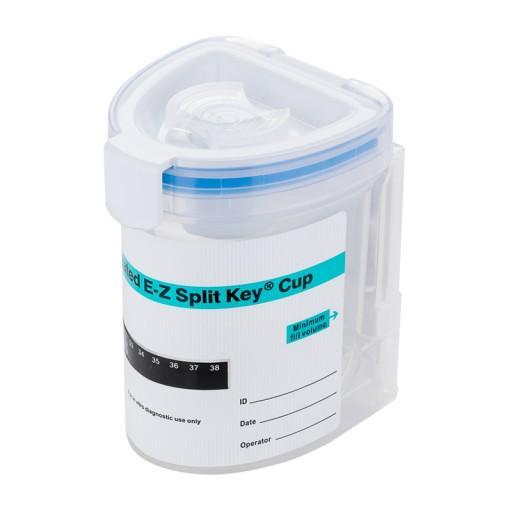
SureStep™ (PACK of 5) - Urine Drug Test Kit
Detect AMP, MOP, BZO, MET, COC & THC through urine in 1 test. Tamper-proof. Results in 5 min. Cut-off levels comply with AS/NZS4308:2008. Convenient multi-drug test panel with integrated E–Z split keyWith built-in adulteration strip. Detect 6 drug groups. Cut-off levels comply with AS/NZS4308:2008.AMP...- $99.00
- $99.00
- Unit price
- per
-
Vendor:Andatech
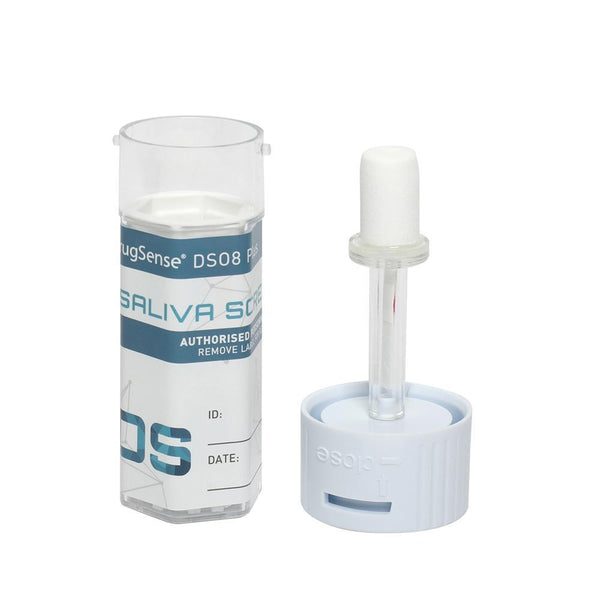
DrugSense DSO8 Plus (PACK OF 5) - Saliva Drug Test Kit
Detect AMP, COC, MET, OPI, THC, BZO, OXY, K2 & alcohol through saliva in 1 test. Easy to use. Non-invasive. Cut-off levels comply with AS/NZS4760:2019. Standard: Verified to AS/NZS 4760:2019AMP 50ng/mlBZO 50ng/mlCOC 50ng/mlMETH 50ng/mlOPI 50ng/mlOXY 40ng/mlTHC 15ng/mlK2 25ng/mlALC 0.02%BAC Priced at $25 Inc GST...- $125.00
- $125.00
- Unit price
- per
-
Vendor:Andatech
ToxWipe™ 7 (PACK of 5) - Saliva Drug Test Kit
Detect AMP, MET, COC, OPI, OXY, BZO & THC in saliva in 1 test. No dry mouth issue with small sample. Standard Verified: AS/NZS 4760:2019AMP 50ng/mlBZO 10ng/mlCOC 50ng/mlMETH 50ng/ml / 100ng/mlOPI 50ng/mlOXY 40ng/mlTHC 15ng/ml Priced at $39 Inc GST each.Sold in a pack of...- $195.00
- $195.00
- Unit price
- per
-
Vendor:Andatech
DrugSense DSU11 (PACK of 5) - Urine Drug Test Kit
Detect AMP, BZO, COC, K2, MET, THC, OPI, OXY, MTD, BAR & KET through urine in 1 test. Tamper-proof. Cut-off levels comply with AS/NZS4308:2008. A complete drug screening system in a sealed cup offers a variety of simple and rapid urine screening tests for...- $99.00
- $99.00
- Unit price
- per
-
Vendor:Andatech
DrugSense OraScan Saliva & Surface Drug Test Cassette V5 (Pack of 5)
DrugSense OraScan Saliva Drug test kit. Detect AMP, MET, COC, OPI, OXY & THC through saliva or surface residue in 1 test. Standard Verified: AS/NZS 4760:2019AMP 50ng/mlCOC 50ng/mlMETH 50ng/mlOPI 50ng/mlOXY 40ng/mlTHC 15ng/ml Priced at $26 Inc GST each.Sold in a pack of 5 units....- $129.00
- $129.00
- Unit price
- per
-
Vendor:Andatech
Chain of Custody Book (50 tests / 150 pages) - PACK of 5
A Chain of Custody helps ensure that the collection, transfer, receipt, analysis, storage and disposal of alcohol and drug testing samples follow the correct procedure, are verified to belong to the specific employee and not tampered with. The Chain of Custody book is...- $300.00
- $300.00
- Unit price
- per


Saliva vs urine drug test kits: which one do you need?
Both types screen for the same core drug classes. The difference is the sample, and the sample decides the detection window, how collection happens and where the kit fits in a testing policy.
| Saliva (oral fluid) drug test kit | Urine drug test kit | |
|---|---|---|
| Detection window | Recent use, generally within the last day or two | A longer look-back, typically one to four days, and longer for some drugs with regular use |
| Collection | Mouth swab, directly observed, no private facilities needed | Cup or cassette, needs a private collection area |
| Result time | Around 10 minutes | About 5 minutes |
| Sample integrity | Observed collection protects the sample | Built-in adulteration checks, plus a temperature strip on cup formats |
| Australian standard | AS/NZS 4760:2019 (oral fluid) | AS/NZS 4308 (urine) |
| Typical use | Random, for-cause and post-incident testing; a quick check at home | Pre-employment and return-to-work screening; the broadest panels |
Choose a saliva kit when the question is "has this person used recently?" and you want collection done in plain sight. Choose a urine kit when a longer window matters or you want the broadest panel: our 11-panel urine cup screens methadone, barbiturates and ketamine, which no saliva kit covers. Many workplaces run both, saliva day to day and urine at hiring. The ranges above are approximate and vary with the drug, dose, frequency of use and the individual; our mouth swab detection times guide explains why saliva windows are so much shorter than urine.
The drug test kits in this range
| Kit | Sample | Screens | Pack |
|---|---|---|---|
| DrugSense DSO8 Plus | Saliva | 8 drug classes plus alcohol | 5 tests |
| ToxWipe 7 | Saliva | 7 drug classes | 5 tests |
| DrugSense DSU11 | Urine, sealed cup | 11 drug classes plus alcohol | 5 tests |
| SureStep | Urine, cassette | 6 drug classes | 5 tests |
| Chain of custody book | Documentation | Records sample handling from collection to the laboratory | Pack of 5 books |
Each category page compares its kits in detail, with panels side by side and supplier-published cut-off levels: saliva drug test kits or urine drug test kits.
What a multi-panel drug test kit screens for
A panel is one test line for one drug class, and a multi-panel kit runs several at once from a single sample. The six classes most screening programs care about are amphetamines, methamphetamine, cocaine, opiates, cannabis (THC) and benzodiazepines. Broader kits add oxycodone, synthetic cannabinoids, methadone, barbiturates or ketamine, and some include an alcohol screen in the same device. A screening kit reports by class: it flags that something in the amphetamine class is at or above the cut-off, for example, and laboratory confirmation identifies the specific substance (Australian Prescriber). Match the panel to what your policy names; a wider panel costs more per test and is not automatically a better kit.
THC test kits
Every kit in this range includes a cannabis (THC) panel, so there is no need to buy a separate single-drug THC test kit. A saliva kit is the usual choice for recent cannabis use; urine can show it over a longer period, particularly with regular use.
Australian standards for drug testing: AS/NZS 4760 and AS/NZS 4308
Two joint Australian and New Zealand standards govern on-site drug screening, one for each sample type.
AS/NZS 4760:2019, Procedure for specimen collection and the detection and quantification of drugs in oral fluid, covers saliva testing: specimen collection, storage and handling, on-site screening, dispatch to a laboratory where required, and the screening cut-off levels a device should meet. It was published in March 2019, replaced the 2006 edition and is current, with a 2020 amendment (Standards Australia).
AS/NZS 4308:2023, Procedures for specimen collection and the detection and quantification of drugs in urine, does the same for urine. The current edition was published in November 2023 and supersedes AS/NZS 4308:2008 (Standards Australia). Because the edition changed recently, check which edition a kit's cut-off levels are published against on its product page before you write a year into a policy; each of our urine kits states its cut-off compliance on its own page.
A kit whose cut-off levels comply with the standard reports non-negative at the concentrations the standard specifies; a kit verified to the standard has had that performance checked by an independent laboratory. Neither standard treats an on-site result as proof of use. Separately, drug test kits are regulated by the Therapeutic Goods Administration as in vitro diagnostic (IVD) medical devices (TGA), a different regime from the voluntary AS 3547 mark on breathalysers.
Home drug testing kits vs workplace testing programs
The kits are the same in both settings; what changes is everything around the test. As home drug testing kits, they give a private, indicative answer in minutes with no appointment. A sealed cup or a swab is straightforward for a first-time user, with instructions in the box and a result read by eye. What a home kit cannot do is prove anything: a non-negative result means a drug class may be present at or above the cut-off, and the right next step is a conversation or a laboratory test, not a conclusion.
In a workplace, the kit is one part of a program. Work health and safety law requires a business to manage risks to workers, and Safe Work Australia notes that this can include policies on drugs and alcohol, with some companies testing where a worker could be seriously injured (Safe Work Australia). A defensible program also needs a written policy, consistent collection, chain of custody records, confidentiality and a confirmatory pathway. Kits enable that program; they do not make a workplace compliant. Our workplace drug and alcohol testing guide covers the legal basis, the five testing triggers and policy writing. These kits screen for drugs only; alcohol testing is the job of a calibrated workplace breathalyser, and most safety-critical programs run both.
Screening versus laboratory confirmation: what a result means
Every kit here is a screening device. The result is negative or non-negative, never "positive" in the final sense, because an on-site immunoassay cannot identify the exact substance or its concentration. Both Australian standards are built around the same two steps, on-site screening first and laboratory confirmation when required (Standards Australia). Confirmation uses mass spectrometry, and the chief toxicologist at the Victorian Institute of Forensic Medicine, writing in Australian Prescriber in 2013, describes it as the usual requirement for workplace and other medicolegal testing; the same article is direct about the limit of any screen: "a positive drug result cannot infer impairment at the time the urine was collected" (Australian Prescriber). Treat a screening result as the reason to confirm, not the verdict. Our chain of custody book documents a sample's handling from collection to laboratory.
How accurate are drug test kits?
Accuracy has two parts: the cut-off and the chemistry. A cut-off is the concentration, in nanograms per millilitre, at which a kit reports non-negative; below it the test reads negative even if a trace is present. Kits sold against the Australian standards publish their cut-offs so you can match them to your policy, and AS/NZS 4308 expects on-site devices to be evaluated above and below the cut-off before field use (Australian Prescriber).
The chemistry is immunoassay, which detects a drug class rather than one molecule, so false results are possible in both directions. A false positive is a screen that laboratory confirmation does not uphold, usually because a medicine or food has cross-reacted with the test; some prescription and over-the-counter medicines can trigger one, which is why workplace policies let people declare prescriptions before testing. A false negative is a screen that misses a drug the laboratory would have found. Reading the result at the specified time, storing kits within their temperature range and checking the expiry date all affect the outcome. No screening kit is infallible, which is why confirmation exists and why a screen should never be the only basis for a serious decision.
Cost per test and pack sizes
Every drug test kit here is sold as a 5-pack, so the price per test is the pack price on each product card divided by five. Five tests is enough for a check at home, a small team or a trial of one kit before a program commits to it, without buying a carton. Saliva kits generally cost more per test than urine kits, and broader panels more than narrower ones, so the cheapest kit is the one whose panel matches your policy and no more. Laboratory confirmation is a separate fee, charged only on the few screens that come back non-negative. Per-test pricing improves with volume: contact our team for a quote across saliva kits, urine kits and chain of custody books.
Buying drug test kits: specialist supplier vs pharmacy
A pharmacy or general retailer will sell you a drug test kit. What the shelf usually cannot tell you is which edition of the standard the cut-offs follow, whether the panel covers oxycodone or synthetic cannabinoids, or which kit suits observed collection on a work site. We supply breath, saliva and urine testing equipment to Australian workplaces and households, and we answer our own phone. Stock ships from our Melbourne warehouse within 1 business day, with free shipping Australia-wide over $175 and local pickup by appointment from Altona. Published cut-offs on every kit, chain of custody consumables and laboratory calibration for breathalysers mean one supplier can equip a complete testing program. Call 03 9360 0780 or contact us if you want a kit matched to your policy before you buy.
Drug Test Kit FAQs
Which drug test kit should I buy for home use?
Decide what you need to know first. For recent use, generally within the last day or two, choose a saliva kit: the DrugSense DSO8 Plus (eight classes plus alcohol) or the ToxWipe 7 (seven classes). For use over the past few days, choose a urine kit: the SureStep (six common classes) or the DrugSense DSU11 (eleven plus alcohol). All four come as 5-packs, and every result is indicative until a laboratory confirms it.
How long after use will a drug show on a test?
As a general guide, a saliva kit detects use within roughly the last day or two, and a urine kit over roughly one to four days, longer for some drugs with regular use. The ranges are approximate and vary with the drug, dose, frequency of use and the individual. Our mouth swab detection times guide explains the difference in more depth.
Can a drug test kit give a false positive?
Yes. On-site kits use immunoassay, which can cross-react with some medicines and foods, so a non-negative screen is not proof of drug use. It is the signal to send the sample to a laboratory for confirmation, which identifies the specific substance. Anyone being tested should declare prescription medicines before the test, and no decision should rest on a screening result alone.
Are these the same tests police use at the roadside?
No. Roadside drug testing uses different instruments under police procedures. Our kits are indicative screening tools for workplace and personal use; a result tells you whether confirmatory testing is warranted and has no official standing in roadside enforcement.
Do I need a chain of custody book?
Not for a check at home. For a workplace, yes, if a result may ever be acted on: the record documents who handled the sample and when, from collection to the laboratory, and a result without one is far easier to challenge. Our books come in packs of 5, each covering 50 tests.
Do you ship drug test kits Australia-wide, and can I pick up?
Yes. Every order dispatches from our Melbourne warehouse within 1 business day, with free shipping Australia-wide over $175 and a flat rate below that. Local pickup is by appointment from 24 Drake Boulevard, Altona VIC 3018, Monday to Friday, 9am to 4pm; call 03 9360 0780 to arrange it.
If you are still deciding between saliva and urine, start with the table at the top of this guide, or call 03 9360 0780 and we will match a kit to your situation.
Last updated: November 2026